top of page

The crane industry’s only unified hub and the leading ecosystem connecting lifting, rigging, transport, equipment, safety, market intelligence, operator stories, and global field reporting. Delivering breaking crane news, trending stories, heavy lift updates, accident insights, and equipment coverage with Global reach. Local impact. Powered by real crews and real professionals worldwide.

Crane Hub Magazine.avif
Reach & Rise Cover .png

Crane Hub Magazines is where the global lifting and heavy equipment industry comes to connect, learn, and lead through people-focused, industry-driven, all-digital publications. Built on the foundation of the original Crane Hub Magazine, our lineup expands in 2026 with eight new titles, spotlighting specialized sectors, regions, and the stories shaping the future of the industry worldwide.

The Crane Hub Global Marketplace brings the global lifting industry together in one powerful platform. Designed for contractors, fleet owners, and equipment suppliers, the Marketplace showcases cranes, lifting equipment, parts, and services from verified sellers and rental providers around the world. With increased visibility, targeted industry reach, and a streamlined user experience, Crane Hub Global Marketplace helps move equipment, and opportunities faster.

COMING SOON!!!

Business Directory.png

The Crane Hub Global Business Directory serves as a comprehensive listing of companies operating within the crane and heavy lift sector. Designed to support visibility, networking, and industry growth, the directory provides a trusted destination for professionals seeking reliable partners, services, and expertise across global markets.

COMING SOON!!!!

Work with Crane Hub Global to grow your brand and connect with the world’s crane, lifting, and heavy transport professionals. Our platforms deliver targeted reach, trusted visibility, and meaningful engagement with the audiences that matter most.

Become a member of the Crane Hub community groups and join a global network of professionals driving the crane, lifting, and heavy transport industry forward. Share knowledge, discover opportunities, and be part of the conversations shaping the work on site and across the world.

Booms Up Buzz Logo.png

The sh*t we laugh about in the cab, the yard, and the yard group chat. Real jobsite humor from real crews.

  • Instagram
  • LinkedIn
  • YouTube
  • TikTok
< Back

Liebherr-Werk Nenzing Converts to HVO Fuel to Cut CO₂ Emissions in Crane Production

Liebherr-Werk Nenzing GmbH has converted its production and logistics operations to HVO fuel, reducing CO₂ emissions, diesel consumption, and supply chain emissions at its Austrian facility.
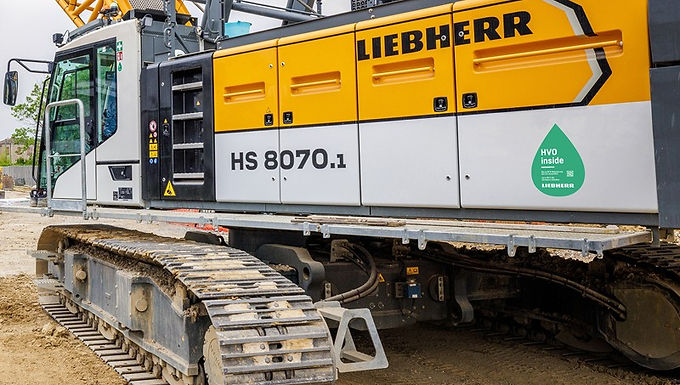
30 Second Takeaway Since August 2024, Liebherr-Werk Nenzing GmbH  has converted its production operations to HVO fuel , replacing fossil diesel in the machines it manufactures and operates. The switch to Hydrotreated Vegetable Oil (HVO)  reduces direct CO₂ emissions  at the Austrian site by approximately 20 per cent , while extending emissions reductions into the logistics supply chain  through HVO-powered transport operations. HVO fuel  introduced across production at Liebherr-Werk Nenzing Liebherr-Werk Nenzing GmbH , based in Nenzing, Austria , has transitioned to HVO fuel  for the machines produced and operated at its manufacturing facility. The conversion has been in effect since August 2024  and represents a significant step toward reducing greenhouse gas emissions  associated with crane and construction machinery production. Unlike fossil diesel, HVO fuel  is largely CO₂-neutral  during combustion and can be used directly in conventional combustion engines without modification. This allows existing machinery to operate immediately with reduced emissions. What is HVO fuel  and how it reduces emissions HVO (Hydrotreated Vegetable Oil)  is a synthetically produced fuel derived primarily from vegetable oils , animal fats , and waste oils  from the food industry. These raw materials are converted into hydrocarbons through a hydrogen treatment process. The HVO fuel  used at Liebherr’s Nenzing site is supplied by Neste  and is free from palm oil . Compared to conventional diesel, this fuel can reduce CO₂ emissions by up to 90 per cent during combustion , depending on the application and blending ratio. At the Nenzing facility, the conversion to HVO fuel  is expected to: Save approximately 300,000 litres of diesel per year Reduce CO₂ emissions by around 810 tonnes annually Deliver a 20 per cent reduction in direct site emissions Because HVO  can be mixed with fossil diesel in any proportion, emissions savings increase as the HVO share  in the fuel mix rises. HVO in logistics  extends emissions reduction to supply chain In addition to production operations, Liebherr-Werk Nenzing GmbH  has extended the use of HVO fuel  into its logistics activities. Since early August 2024, all transport operations serving the site have been carried out by a Vorarlberg-based transport company  using HVO-powered vehicles . This change significantly reduces emissions associated with inbound and outbound logistics, delivering: A 23 per cent reduction in transport-related emissions Savings of approximately 3,500 tonnes of CO₂ By converting both production equipment and transport operations, the Nenzing site is addressing emissions across multiple stages of its operational footprint. HVO compatibility  across Liebherr machine fleets A key advantage of HVO fuel  is its compatibility with conventional combustion engines , allowing immediate deployment across a wide range of machinery. As a result, most Liebherr machines in the global fleet  can operate with HVO fuel  without technical modification. This compatibility supports broader adoption of low-emission fuels  across construction sites, industrial operations, and logistics networks where full electrification may not yet be feasible. About Liebherr-Werk Nenzing GmbH Liebherr-Werk Nenzing GmbH , located in the Austrian Alps, specialises in the development and production of construction machinery  for demanding applications. The site manufactures crawler cranes , hydraulic rope excavators , and piling and drilling rigs , supplying customers worldwide. The Nenzing facility plays a central role in Liebherr’s crawler crane production  and supports ongoing development of digital solutions and services for modern construction sites. The transition to HVO fuel  reflects site-level initiatives aimed at reducing operational emissions while maintaining production efficiency. About Neste Neste  develops renewable fuels and circular raw materials using waste-based and renewable feedstocks. The company focuses on transforming waste oils and residues into renewable diesel , sustainable aviation fuel , and circular solutions that support emissions reduction across transport, industry, and logistics sectors. Frequently Asked Questions What is HVO fuel? HVO (Hydrotreated Vegetable Oil)  is a renewable fuel produced from vegetable oils, animal fats, and waste oils, offering significantly lower CO₂ emissions  than fossil diesel. Why did Liebherr-Werk Nenzing switch to HVO fuel? The conversion reduces direct CO₂ emissions , lowers fossil fuel consumption, and allows existing machinery to operate with reduced environmental impact. How much CO₂ does the conversion save? The switch saves approximately 810 tonnes of CO₂ per year  at the Nenzing site, equating to a 20 per cent reduction in direct emissions . Can HVO be used in conventional diesel engines? Yes. HVO fuel  can be used in standard combustion engines and mixed with fossil diesel in any ratio. How does HVO affect logistics emissions? Using HVO-powered transport vehicles  reduces logistics-related emissions by around 23 per cent , saving approximately 3,500 tonnes of CO₂ .logy to transform waste and other resources into renewable fuels and circular raw materials; helping you act now, to meet your sustainability goals.

liebherr-werk-nenzing-gmbh-converts-to-hvo-fuel

bottom of page