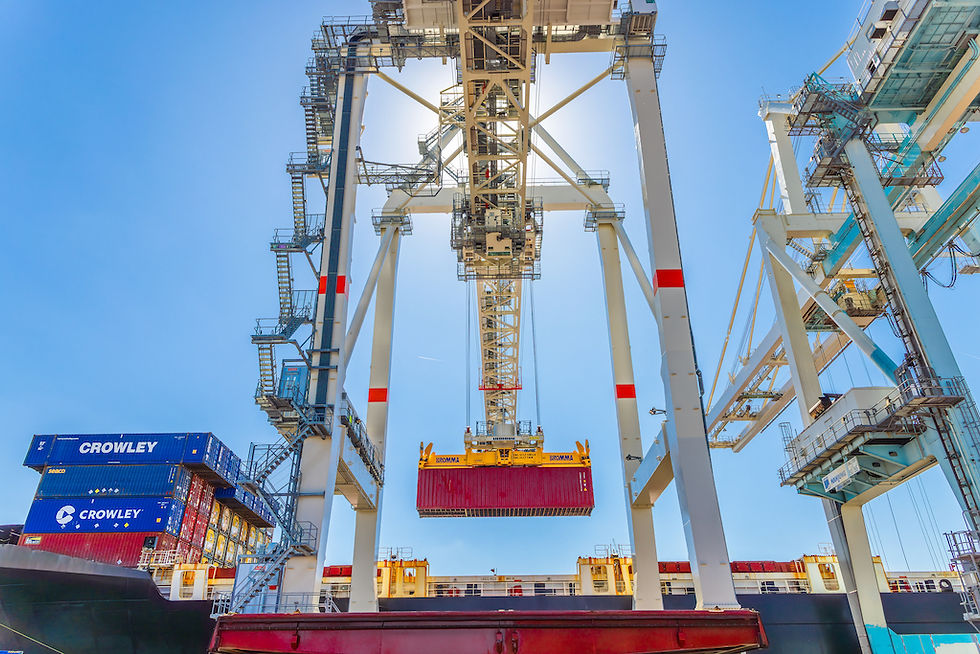
Port de Sète Puts Liebherr LHM 550 to Work on 170-Tonne Transformer Transfer

30-Second Takeaway
Port de Sète commissioned its new Liebherr LHM 550 mobile harbour crane on 18 November 2026, putting it to work at Quai G on the transfer of a 170-tonne electrical transformer from a barge to a vessel. The crane replaces a MAGUE unit damaged during Storm Nils. With the LHM 550 in service, the French Mediterranean port reports that its overall heavy-lift capability has risen from 268 to 288 tonnes.

A project cargo debut at Quai G
The transformer transfer illustrates why two capacity figures matter at Sète. Liebherr rates the individual LHM 550 at up to 154 tonnes in heavy-lift configuration. The 288-tonne figure describes the lifting capability the port can now offer across its equipment. The port confirmed the new crane’s participation in the 170-tonne transfer but did not identify the partner crane or publish the load share.
The LHM 550 is equipped for tandem operation using Liebherr’s Sycratronic assistance system. For industrial shippers, the addition raises the port’s stated heavy-lift ceiling by 20 tonnes while retaining a crane that can switch to container and dry bulk work between project cargo calls.
LHM 550 capacity at the hook and across the hold
The LHM 550 has a maximum outreach of 54 metres. Liebherr’s published heavy-lift chart gives a useful comparison: 154 tonnes at an 18-metre radius and 40.9 tonnes at 54 metres. Those figures show why a cargo’s position aboard the vessel matters alongside its weight.
Operating figure | Published capability |
LHM 550 heavy-lift capacity at 18 m radius | 154 tonnes |
LHM 550 heavy-lift capacity at 54 m radius | 40.9 tonnes |
Maximum bulk handling rate quoted by the port | 1,500 tonnes per hour |
Port de Sète’s overall lifting capability after commissioning | 288 tonnes |
For bulk vessels, outreach allows the crane to work across the hold. For project cargo such as transformers, the relevant figure is the capacity available at the radius required for the transfer.
From Liebherr’s Rostock works to southern France
Liebherr manufactured the crane at its maritime equipment facility in Rostock, Germany. BigLift transported the unit by sea to Sète, where it replaced the storm-damaged MAGUE crane. The replacement gives the commercial port a single machine available for three distinct streams of work: heavy project cargo, containers and dry bulk.
About Port de Sète
Port de Sète is a French Mediterranean port serving industrial and maritime logistics customers in southern France. Its commercial operations handle bulk commodities, containers and heavy project cargo. The barge-to-vessel transfer at Quai G is one example of how the port connects inland waterway transport with seagoing services.
Website: sete.port.fr
About Liebherr Maritime Cranes
Liebherr manufactures maritime lifting equipment, including mobile harbour cranes for container terminals, bulk berths and multipurpose ports. Its Rostock facility in northern Germany manufactured the LHM 550 delivered to Sète. The model combines a wheeled undercarriage with heavy-lift, container and grab-handling configurations, allowing ports to deploy it across different berths and cargo types.
Website: www.liebherr.com
Frequently Asked Questions
What was the first assignment for the new Liebherr LHM 550 at Sète?
On 18 November 2026, the crane took part in transferring a 170-tonne electrical transformer from a barge to a vessel at Quai G.
What does Port de Sète’s 288-tonne capacity refer to?
It is the port’s reported overall lifting capability following the addition of the new crane. The previous figure was 268 tonnes. The LHM 550 itself has a maximum heavy-lift rating of 154 tonnes.
How much can the LHM 550 lift at full outreach?
Liebherr’s published heavy-lift chart lists 40.9 tonnes at 54 metres. The same chart lists 154 tonnes at 18 metres.
How much bulk cargo can the crane handle per hour?
Port de Sète quotes a maximum bulk handling rate of 1,500 tonnes per hour. The crane can also handle containers and individual heavy loads.
Which crane did the LHM 550 replace?
It replaced the port’s MAGUE crane, which was damaged during Storm Nils. The replacement was manufactured in Rostock and delivered to Sète by sea.