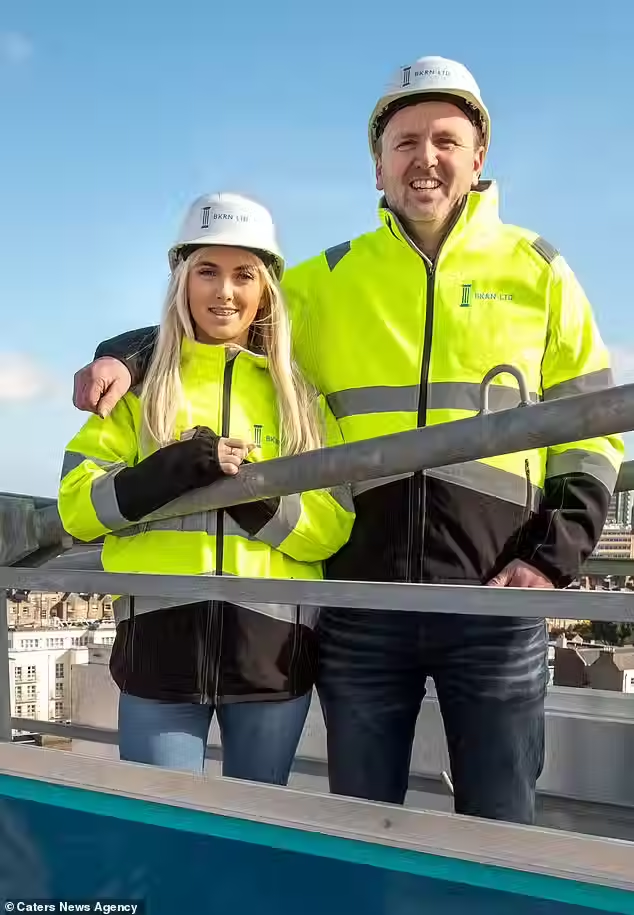
Finding Her Place Above the Skyline: Kate Fahey on Becoming One of the World’s Youngest Female Crane Operators
30 Second Takeaway
At just eighteen years old, Kate Fahey became one of the world’s youngest licensed female crane operators. What began as a summer job in office administration on her father’s construction site in Ireland quickly turned into a career 130 feet above the ground. In this conversation, Kate shares how she found her confidence in the crane cab, navigated being the youngest and only woman on site, and why visibility is key to bringing more women into construction.

An Unexpected Path into Construction
Kate Fahey never planned a career in construction. In fact, her entry into the industry was almost accidental. After finishing her Leaving Certificate, she took a part-time summer job doing office administration on her father’s site in Ireland.
“I feel like it was pure coincidence, really,” Kate says.
Everything changed the day her crane operator trainer, Paddy, invited her to climb up and sit in the crane.
“The lads were like, ‘she’s not going to make it up,’” Kate recalls. “They thought I’d bitten off more than I could chew.”
Instead, that climb marked the beginning of a career she hadn’t even known was possible.
The Moment That Changed Everything
Kate still remembers her first time sitting in the crane cab.
“I’ll never forget the feeling of looking out across the Dublin skyline and just being like, ‘Oh my God. This is class.’”
High above the city, something clicked. From that moment on, Kate knew she had found something special. Operating the crane came naturally to her, and the more time she spent learning, the more confident she became.
“When I started driving, it just came so naturally to me. I just knew it was something I wanted to do.”
She decided to take a year out of school, completed six months of training, earned her crane ticket, and hasn’t looked back since.
Choosing the Crane Over College
While many of her peers were heading off to university, Kate made a different choice — one that put her 130 feet in the air instead of in a lecture hall. Now recognised as Ireland’s youngest crane operator, she admits the role comes with challenges, particularly as the youngest and only woman on many sites.
“People tend to undermine me,” she says. “There have been times where new lads start on site and it’s like they’ve never seen a crane before with how much they stare.”
Despite the attention, Kate has learned to hold her ground.
“You have to have a backbone.”
Facing and Overcoming Bias on Site
Kate openly acknowledges that working in a male-dominated industry hasn’t always been easy.
“When I was working in Dublin, I went down to meet a delivery driver who looked shocked to see me,” she explains. “He kept asking if I was the banksman and if I was qualified.”
Rather than letting moments like that define her, Kate brushes them off and focuses on the job at hand. Even with occasional sexism, her love for crane operating outweighs the negatives and she actively encourages others, regardless of gender, to pursue a career in construction.
Discovering the Power of Visibility
One of the most unexpected parts of Kate’s journey has been the impact she’s had on others.
“At the start, I thought I’d have no impact on people,” she says. “I thought I was just another person coming to work every day.”
That quickly changed.
“I know girls in local towns who have texted me asking how you go about becoming a crane driver.”
For Kate, that outreach is something she takes seriously.
“If I can help people get into the industry at all guide them, give advice I’m more than happy to.”
Why Representation Matters
When asked how the industry can attract more women, Kate’s answer is simple.
“The more women get into construction, the more women will follow.”
She believes the change needs to start early.
“If you’re shown different careers that have women in them women engineers, women electricians it shows girls they can do it too.”
Visibility, she says, creates possibility.
Support Where She Least Expected It
One of the biggest surprises for Kate was the support she received from her male colleagues.
“I thought the lads would be like, ‘a female coming in here? We don’t want this at all.’”
Instead, the response was the opposite.
“They’re really supportive, proud, and encouraging. That was a huge thing for me.”
That encouragement helped reinforce her confidence and sense of belonging on site.
Learning What You Can’t See from the Ground
Crane operating has also taught Kate lessons that aren’t obvious from below.
“One thing that surprised me is how cranes move in the wind,” she says.
“When winds hit up to 70 kilometres per hour, you can feel the cab move and see the jib weld. That’s something you don’t think about when you’re standing on the ground looking up.”
Despite the height, Kate insists fear was never part of the equation.
“I wasn’t even nervous about the height. I was just nervous about learning a new role.”
Once she saw the view, she was hooked.
“I’ve loved it ever since.”
Looking Ahead
As for what’s next, Kate isn’t short on ambition.
“I’d love to go on a 70-metre crane,” she says, laughing. “Even though I wouldn’t really like the climb.”
For now, she’s focused on continuing to learn, gaining experience, and showing others especially young women that construction careers don’t have to follow a traditional path.
Sometimes, all it takes is saying yes to climbing the ladder.