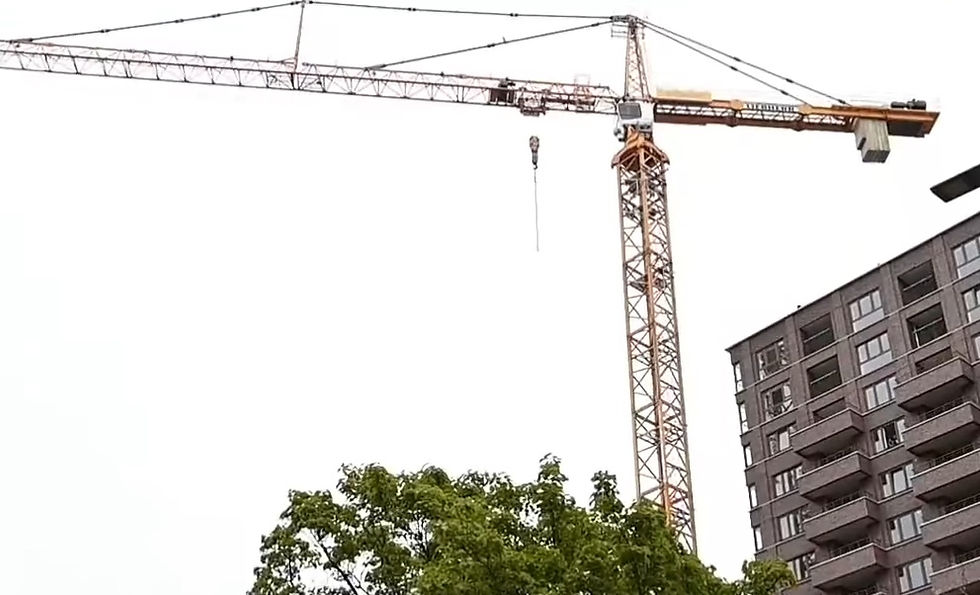
Tower Crane Breaks in Two at Dutch Shipyard, Injuring Two Workers
30-Second Takeaway
Two men were injured, one seriously, after a tower crane separated into two sections at a shipyard in Maasbracht, Limburg, in the Netherlands. The incident occurred this morning at the Tinnemans Shipbuilding yard. One worker was rescued from the crane tower using a fire service rescue platform. Early indications suggest a possible failure at a tower connection, though the incident remains under investigation.
Incident Overview
A tower crane structural failure occurred this morning at a shipyard in Maasbracht, in the province of Limburg, south of Venlo and north of Maastricht.
During the incident, the tower crane parted into two sections, injuring two men who were working on or within the crane at the time.

What Is Known
Location: Tinnemans Shipbuilding yard, Maasbracht, Netherlands
Date: Tuesday April 15th
Incident type: Tower crane structural separation
Injured: 2 workers
1 seriously injured
Emergency response: Ambulances and rescue helicopter attended
Both injured men were treated at the scene and transported to hospital by ambulance.
Worker Positions at Time of Incident
Information received from a reliable source indicates:
One worker was climbing the crane tower at the time
He had reached a point just below the separation point
He was rescued using a fire service rescue platform
The second worker is believed to have been inside the operator’s cab
This detail has not yet been independently confirmed
Crane Configuration and Apparent Failure Area
The crane was installed on a counterweighted, rail-mounted base at the shipyard.
Observations from the scene indicate:
The base appears to have tilted slightly, either before or after the tower separation
The tower sections parted at a connection point
The failure appears consistent with a connection or bolt-related issue, though this has not been confirmed
Photographs from the scene show a clear separation between tower sections, rather than a progressive collapse.
Emergency Response
Emergency services responded quickly:
Fire service deployed a rescue platform
Ambulance services treated and transported both injured workers
A rescue helicopter attended the scene as a precaution
The area was secured while responders ensured no further risk of collapse.
Investigation Status
Authorities are expected to investigate:
Tower section connection design and condition
Bolt specification, installation, and torque history
Foundation and rail-mounted base stability
Whether base movement contributed to connection loading
Inspection and maintenance records
No official findings or conclusions have been released at the time of publication.
Crane Hub Global will update this article as verified information becomes available.
Why Tower Section Failures Occur
Tower crane section failures are rare but can occur due to:
Incorrect or insufficient bolt torque
Fatigue or corrosion of connection hardware
Misalignment during erection
Base or rail movement introducing unintended forces
Load cases not accounted for in temporary conditions
Connection points are among the most critical structural interfaces in tower crane systems.
Industry Reminder
Tower crane connections are unforgiving. When they fail, consequences are immediate and severe.
This incident reinforces the importance of connection integrity, base stability, and disciplined inspection regimes, particularly in industrial and shipyard environments.
Editorial Note
Crane Hub Global reports on crane and lifting incidents to support industry learning and prevention. Where details remain unconfirmed, this is clearly stated. This article will be updated as official findings are released.

How Incidents Like This Can Be Prevented
Verified Connection Assembly
Tower section connections must be assembled strictly to manufacturer specifications, including bolt type, number, and torque.
Torque Recording and Inspection
Critical bolts should be:
Torqued using calibrated tools
Documented
Rechecked after initial loading and periodically thereafter
Base and Rail Stability Monitoring
Rail-mounted bases must be continuously monitored for:
Settlement
Alignment
Unexpected movement
Access Control During Structural Work
Personnel exposure during inspection or climbing activities should be minimised if structural concerns exist.
Independent Verification
Third-party checks during erection and commissioning provide an added layer of safety for critical connections.