


Tower Crane Collapse in Ibiza Raises Critical Questions About Wind Safety and Preventable Risk
30 Second Takeaway
A tower crane collapse occurred on a coastal construction site in Ibiza on Saturday, January 10th, during high wind conditions. While investigations into the crane accident are ongoing, early indicators suggest wind gusts at height may have exceeded safe operating limits. The incident highlights recurring crane safety failures related to wind monitoring, stop-work decision-making, and operations in exposed environments all of which are widely understood and preventable across the construction industry.

Incident Overview
Playa d’en Bossa, Ibiza Saturday, January 10, 2026
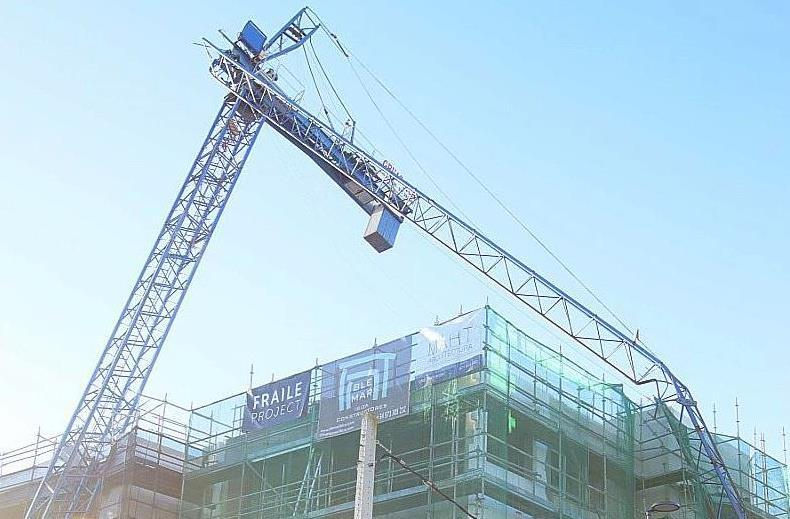
A serious tower crane accident occurred at a high-rise construction project in Playa d’en Bossa, Ibiza, when a tower crane collapsed during reported high wind conditions.
The crane, owned by Gruas Jica, was operating at an exposed coastal construction site when wind gusts were present. While publicly reported peak wind speeds were approximately 31 mph, crane safety experts consistently warn that wind gusts at height can significantly exceed recorded ground-level data, particularly in coastal and urban environments.
Local authorities have launched a crane collapse investigation to determine contributing factors.
What Happened
Based on information available at the time of publication:
The tower crane was operating during periods of strong wind gusts
The construction site was located in a high-exposure coastal zone
Wind conditions appear to have escalated prior to the collapse
The crane lost stability and collapsed on site
No confirmed injuries have been publicly reported at the time of writing. The investigation into the crane collapse remains ongoing.
What Is Known
Crane type: Tower crane
Incident type: Tower crane collapse
Location: Playa d’en Bossa, Ibiza
Date: Saturday, January 10
Weather conditions: High wind gusts reported
Injuries: Not confirmed at time of publication
Investigation: Active crane accident investigation underway
Unverified claims regarding possible structural interference have circulated but remain unsubstantiated and are under review by authorities.
Why Wind-Related Crane Collapses Are Often Preventable
Wind-related crane failures are a leading cause of serious crane accidents globally. These incidents rarely occur without warning.
Common contributing factors include:
Reliance on average wind speeds rather than gust data
Lack of real-time wind monitoring at jib or mast height
Wind acceleration around tall structures and coastal terrain
Continued crane operations despite deteriorating conditions
In tower crane operations, gust-driven dynamic loading can exceed safe limits long before standard thresholds appear to be reached, particularly in exposed construction environments.
Industry Learning: Crane Safety Is a Decision-Making Issue
This tower crane collapse reinforces a fundamental industry reality:
Crane accidents are rarely caused by equipment alone they result from decisions made as risk increases.
Key crane safety controls that consistently reduce wind-related crane incidents include:
Conservative wind limits tailored to site exposure
Real-time wind monitoring at operational height
Clearly defined and protected stop-work authority
Strict verification of crane foundations and anchor systems
Immediate shutdown protocols when conditions become uncertain
When these controls are compromised, crane collapse risk increases rapidly.
Industry Reminder
This crane accident was not the result of a sudden or unforeseeable event.
Most crane collapses occur when known risks are accepted, normalized, or left unchallenged as site conditions change.
Standing down crane operations during high wind conditions is not a delay — it is a critical safety control.
Editorial Note
Crane Hub Global reports on crane accidents, tower crane collapses, and construction site incidents to support industry learning and improve crane safety worldwide. This article is based on publicly available information at the time of publication and may be updated as new details emerge from the ongoing investigation.
How Wind-Related Crane Accidents Can Be Prevented
Prioritise Wind Gusts Over Average Wind Speeds
Crane safety decisions must be based on gusts at operating height, not ground-level averages.
Implement Conservative Stop-Work Thresholds
Especially on coastal, elevated, or urban
construction sites.
Use Real-Time Wind Monitoring Systems
Anemometers should reflect conditions where the crane is operating.
Empower Stop-Work Authority
Operators and supervisors must be supported to stop crane operations without schedule pressure.
Treat Uncertainty as a Shutdown Trigger
If wind conditions are questionable, standing down prevents escalation.


