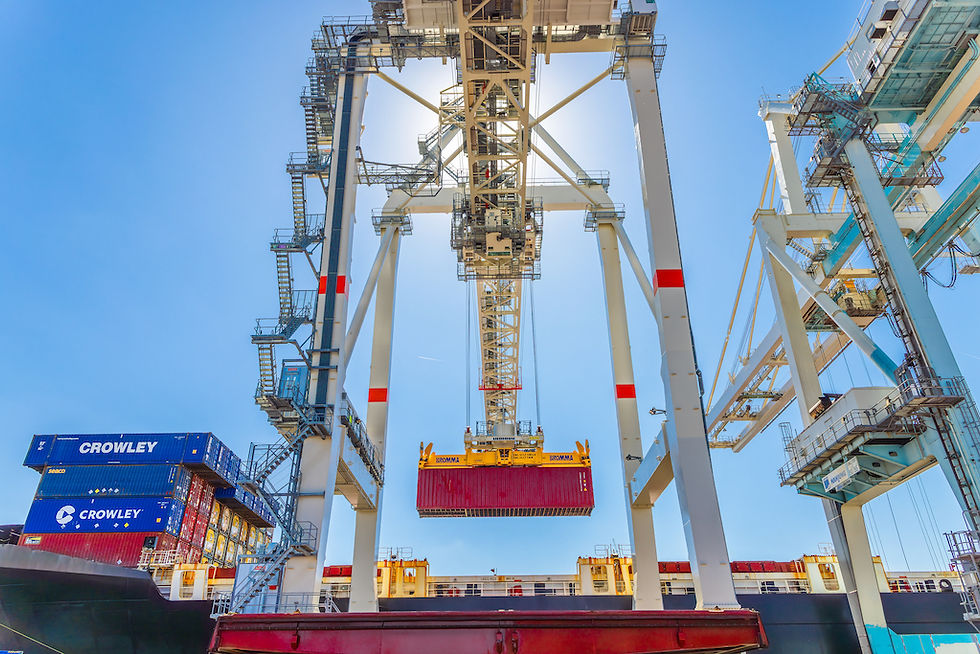
Precision Operations in the Port of Casablanca: Somalev Dismantles Two Container Cranes
30-Second Takeaway
Moroccan heavy lift specialist Somalev Cranes & Logistics has dismantled two Liebherr ship-to-shore (STS) container cranes at the Port of Casablanca as part of terminal modernisation works. Using a LTM 1400-7.1 and LTM 1250/1 mobile crane, the team removed more than 1,400 tonnes of steel structure at lifting heights up to 70 metres all while port operations continued. The project demanded synchronised lifting, conservative load planning and strict safety controls in a confined, live terminal environment.

LTM 1400-7.1 and LTM 1250/1 Dismantle STS Cranes in Casablanca
In the Port of Casablanca, Somalev Cranes & Logistics has successfully decommissioned two Liebherr ship-to-shore container cranes following more than two decades of intensive service.
The dismantling formed part of a broader terminal modernisation programme aimed at upgrading port infrastructure to meet evolving container handling requirements.
To execute the complex operation, Somalev deployed two Liebherr telescopic mobile cranes:
LTM 1400-7.1
LTM 1250/1
Together, the cranes dismantled more than 1,400 tonnes of steel structure, including boom sections, machinery houses and portal elements.
The work was carried out at lifting heights of up to 70 metres, requiring highly detailed lift planning and controlled execution within an active container terminal.
Strategic Use of Telescopic Cranes in Confined Port Areas
Somalev deliberately selected telescopic cranes rather than lattice boom cranes for this project.
This approach provided:
Greater flexibility for adapting to changing load cases
Reduced floor space requirements
Faster configuration changes
Improved manoeuvrability in confined port areas
Both cranes offered high lifting capacities combined with compact outrigger footprints — critical in an operational terminal where space was limited and exclusion zones had to be carefully defined.
The telescopic configuration allowed step-by-step dismantling of large structural components while maintaining adaptability throughout the project.
Technical and Operational Challenges
The project presented several complex challenges:
Age-related structural changes in the STS cranes
Conservative load assumptions due to long-term operational wear
Limited dismantling space within an active port
Continuous coordination with port authorities and terminal operators
Strict exclusion and safety zones
Given the structural age of the cranes, Somalev implemented reinforced rigging solutions and applied conservative load calculations to ensure safe lifting conditions.
All work was executed during ongoing port operations, requiring constant communication with terminal management to minimise disruption to container handling activities.
Controlled Reverse Assembly and Synchronised Lifting
The dismantling process had to be executed in the reverse order of the original assembly, adding further complexity to the project.
Different structural elements required:
Variable crane configurations
Adjusted counterweight arrangements
Customised rigging solutions
Precise boom positioning
Several phases of the operation required synchronised lifts between the LTM 1400-7.1 and the LTM 1250/1.
These tandem lifting operations demanded:
Exact lift sequencing
Real-time coordination
Clear communication protocols
Continuous monitoring of crane parameters
Precise timing and alignment were essential to ensure structural stability during removal of heavy sections such as boom components and portal frames.
Highest Safety Standards in an Active Terminal
Safety was central to the project execution.
Somalev implemented:
Project-specific risk assessments of damaged or aged components
Redundant rigging systems
Clearly defined controlled access zones
Continuous wind monitoring
Real-time crane parameter supervision
A flexible execution methodology was applied to accommodate unexpected structural conditions encountered during dismantling.
Optimised crane configurations reduced the required ground footprint, allowing terminal operations to continue with minimal interference.
Industrial Decommissioning Expertise Demonstrated
The successful completion of the dismantling highlights Somalev’s expertise in industrial decommissioning and heavy lifting operations.
By combining detailed planning, proven Liebherr crane technology and strict safety controls, the team delivered a complex dismantling project safely and efficiently.
The operation also demonstrates the durability and longevity of Liebherr STS cranes, which had provided reliable service in demanding terminal conditions for more than twenty years.
As ports worldwide modernise infrastructure to accommodate larger vessels and evolving container handling technologies, controlled crane decommissioning projects such as this are becoming increasingly common requiring specialised lifting capabilities and precision execution.
About Somalev Cranes & Logistics
Somalev Cranes & Logistics is a Moroccan heavy lifting and logistics specialist providing crane services, industrial transport and complex project handling solutions across port, infrastructure and industrial sectors.
About Liebherr Mobile and Maritime Cranes
Liebherr is a global manufacturer of mobile cranes and maritime crane solutions, including ship-to-shore container cranes. The company is recognised worldwide for engineering reliability, high lifting performance and long service life in demanding port and industrial environments.
Website: https://www.liebherr.com
Frequently Asked Questions
Which cranes were used to dismantle the STS cranes in Casablanca?
Somalev used a Liebherr LTM 1400-7.1 and a Liebherr LTM 1250/1 telescopic mobile crane.
How much steel structure was dismantled?
More than 1,400 tonnes of steel structure were removed during the project.
What made the dismantling challenging?
The project was carried out in an active terminal with limited space, required conservative load planning due to crane age, and involved synchronised lifting at heights up to 70 metres.
Why were telescopic cranes selected instead of lattice boom cranes?
Telescopic cranes offered greater flexibility, faster configuration adjustments and a reduced footprint in confined port areas.
Was port activity stopped during the dismantling?
No, the work was completed during ongoing port operations with strict safety controls and coordination.